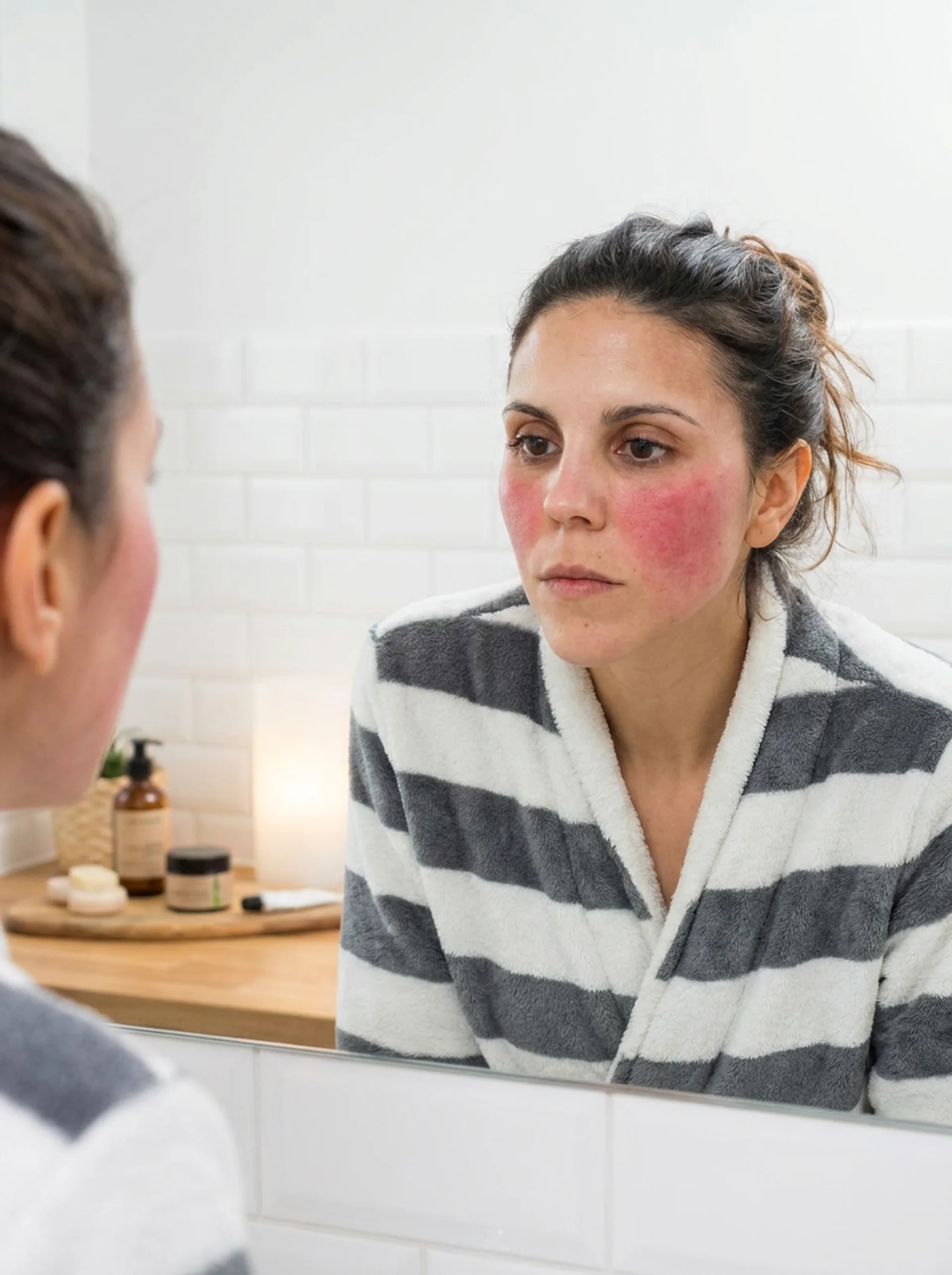
Facial flushing & blushing From medication and CBT to T2 sympathectomy
Some people flush or blush intensely and uncontrollably — the face turns red in social or stressful situations, often with a distressing fear of it happening. When it seriously affects confidence and daily life, it can be treated. Care follows a step-by-step ladder, starting with the simplest options and considering surgery only if those don’t help.
Treatment, step by step
1
🧘 Manage triggers & lifestyleIdentify and reduce known triggers (heat, alcohol, stressful situations) and simple measures to calm the flushing response.
2
💊 MedicationsMedicines such as beta-blockers (for example propranolol), clonidine, or anticholinergics can dampen the flushing response for many people.
3
🧠 Psychological therapy — CBTBecause a fear of blushing and social anxiety often drive the problem, cognitive behavioural therapy (CBT) is an important step and helps many patients without surgery.
4
🏥 Surgery — T2 sympathectomy (nerve clipping)A keyhole operation that interrupts the T2 sympathetic nerve, which controls the blushing response. It is reserved for severe cases that haven’t improved with the steps above, after careful counselling.
What the studies show
In published studies, T2 sympathectomy improves facial blushing for the large majority of carefully selected patients, with reported satisfaction commonly around 75–90%. The main trade-off is compensatory sweating (sweating that shifts to the trunk, back or legs), which is common after this procedure — more so than with hand-only surgery — and a small number of patients regret it. Mild blushing can also return over time. For these reasons surgery is a considered last step, with a thorough discussion of the benefits and risks. Individual results vary.
Quick self-check
Could you benefit from an assessment?
It takes under a minute. This is a guide, not a diagnosis — it looks at how much blushing affects you and what tends to trigger it (which helps predict who responds to treatment).
For informational purposes only — not a diagnosis or medical advice.
Medically reviewed by Dr. Kashif Irshad, MD, MSc, FRCSC · Last updated July 2026
Frequently asked questions
What are the treatment options for facial flushing and blushing?
Treatment is stepwise. It starts with managing triggers and lifestyle (heat, alcohol, stressful situations), then medications such as beta-blockers like propranolol, clonidine or anticholinergics, then cognitive behavioural therapy (CBT). Surgery — T2 sympathectomy — is reserved for severe cases that have not improved with these steps.
Can facial blushing be treated without surgery?
Yes. Trigger management, medications and CBT help many patients without surgery. Because a fear of blushing and social anxiety often drive the problem, CBT is an important step and helps many patients avoid an operation.
How effective is T2 sympathectomy for facial blushing?
In published studies, T2 sympathectomy improves facial blushing for the large majority of carefully selected patients, with reported satisfaction commonly around 75–90%. Individual results vary.
What are the risks and trade-offs of T2 sympathectomy?
The main trade-off is compensatory sweating — sweating that shifts to the trunk, back or legs — which is common after this procedure, more so than with hand-only surgery. A small number of patients regret it, and mild blushing can return over time. For these reasons surgery is a considered last step, after a thorough discussion of the benefits and risks.
Do I need a referral to see Dr. Irshad about facial flushing?
Yes. A referral from your family doctor or specialist is all that is needed to be seen by Dr. Irshad.
A referral from your family doctor or specialist is all that’s needed to be seen by Dr. Irshad. Find the referral forms and clinic details below.