Lung cancer surgery
VATS & robotic lobectomy and segmentectomy
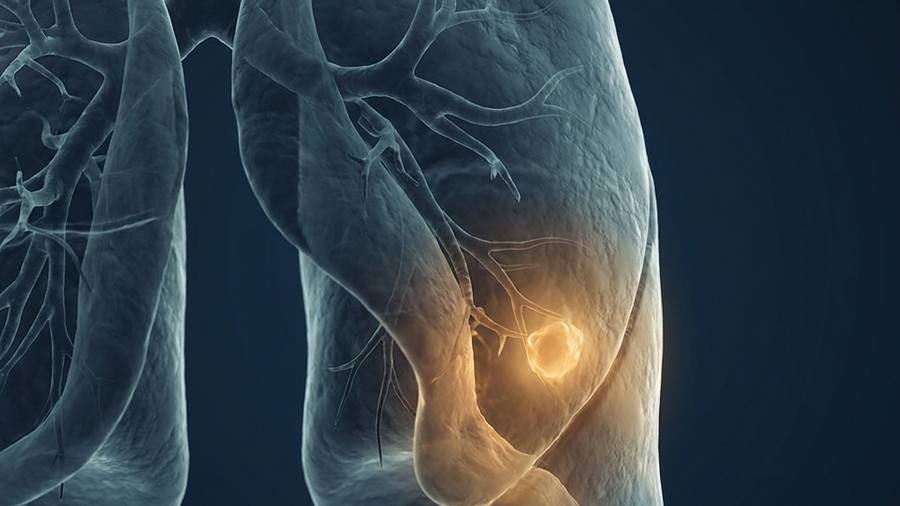
Lung cancer is a growth that starts in the lung. When it’s found early, it can often be removed through a few small keyhole cuts instead of a large open operation. Dr. Irshad performs more than 95% of his lung operations this minimally invasive way — robotically (RATS) or by keyhole (VATS) — which usually means less pain, a shorter hospital stay, and a faster return to normal life.
What is lung cancer?
Lung cancer happens when cells in the lung grow out of control and form a tumour. The most common kind is non-small cell lung cancer. Caught early, before it spreads, surgery to remove the affected part of the lung offers the best chance of long-term control or cure when it’s found early.
Signs & symptoms
- A cough that won’t go away or changes
- Coughing up blood
- Shortness of breath
- Chest pain
- Repeated chest infections
- Unexplained weight loss or tiredness
- Note: early lung cancer often has no symptoms and is found on a scan
See your doctor if a cough lasts more than three weeks, you cough up blood, or you have ongoing chest symptoms — getting checked early matters.
How it’s diagnosed
- CT scan to look at the tumour
- PET scan to check whether it has spread
- Biopsy & staging — often with EBUS (endobronchial ultrasound), a scope used to sample lymph nodes and check whether the cancer has spread. EBUS recovery guide (PDF)
- Breathing tests to plan surgery safely
Treatment options
- Lobectomy — removing the lobe that holds the tumour
- Segmentectomy or wedge — removing a smaller piece for early, small tumours
- VATS or robotic keyhole approaches
- Combined care with chemotherapy, immunotherapy or radiation when needed
Keyhole lung surgery
Using VATS (video-assisted) and robotic techniques, Dr. Irshad removes lung tumours through a few small cuts rather than spreading the ribs as in open surgery. Large studies show keyhole lobectomy gives cancer control as good as — or better than — open surgery, with fewer complications.
More than 95% of his lung resections are done this way, so most patients recover faster and get home sooner.
Your recovery, step by step
Prehab helps: stopping smoking and doing daily breathing exercises lowers your risk and speeds recovery.
Usually 2–3 days, compared with 5–7 for open surgery.
Rest at home with short walks; no driving. The chest drain is removed before you leave hospital.
Activity gradually increases; most people return to light activities.
Follow-up with Dr. Irshad; most patients are cleared for normal activity.
Lung-function checks and oncology follow-up as needed.
Common questions
What are the stages of lung cancer?
Can I have minimally invasive surgery even if the tumour is large?
Is the cancer control as good with keyhole surgery?
Who benefits from immunotherapy before surgery?
How do I get referred to Dr. Irshad?
Preparing for your surgery at William Osler
Your operation takes place at William Osler Health System (Brampton Civic Hospital). These are the hospital’s general instructions for getting ready, the day itself, and afterwards — always follow any specific advice Dr. Irshad gives you. Full details are on the Osler Surgical Services page.
Before your surgery
- Do not eat anything (including gum) after midnight the night before. Unless told otherwise, you may have clear fluids — water, pulp-free juice, black coffee or tea — up to 2 hours before.
- No alcohol, smoking, or marijuana for 24 hours before surgery.
- Shower the evening before and the morning of surgery (with chlorhexidine soap if you have it). Skip lotion, perfume, makeup and nail polish.
- Bring your OHIP card and photo ID, all your medications in their original containers (inhalers, insulin, supplements), and your CPAP machine if you use one.
- Arrange a responsible adult to drive you home — a taxi, Uber or Lyft does not count, and surgery may be cancelled without one.
- Leave jewellery, money and valuables at home.
The day of your surgery
After your surgery
The pre-anaesthesia clinic
Medically reviewed by Dr. Kashif Irshad, MD, MSc, FRCSC · Last updated July 2026
A referral from your family doctor or specialist is all that’s needed to be seen by Dr. Irshad. Find the referral forms and clinic details below.
Referral information →