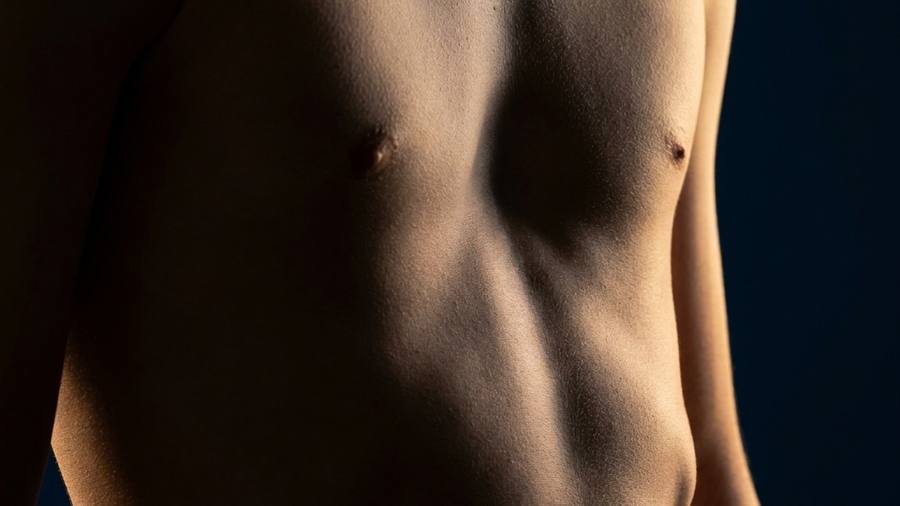
Pectus excavatum
The Nuss procedure — minimally invasive sunken-chest repair
Pectus excavatum is when the breastbone grows inward, giving the chest a sunken or “caved-in” look. It’s the most common chest-wall difference and can affect confidence and, in deeper cases, breathing or the heart. The Nuss procedure reshapes the chest using a hidden support bar — Dr. Irshad introduced this operation to William Osler Health System.
Dr. Irshad specializes in pectus excavatum surgery for adults. Children and adolescents are referred to a paediatric (children’s) hospital, where specialist teams care for younger patients.
What is pectus excavatum?
The cartilage that joins the ribs to the breastbone grows unevenly, pulling the breastbone inward. It’s usually noticed in the teenage years during a growth spurt. Most cases are about appearance, but deeper ones can press on the heart and lungs.
Signs & symptoms
- A sunken-looking chest
- Self-consciousness about appearance
- Shortness of breath or tiring quickly with exercise
- Chest discomfort
- In deeper cases, the heart can be pushed to one side
Pectus excavatum is usually first noticed in the teenage years. It’s worth getting assessed if it’s affecting breathing or exercise, causing chest discomfort, or affecting confidence.
How it’s assessed
- A physical exam
- A CT or MRI to measure the depth (the Haller Index)
- Sometimes heart and lung tests to check for any effect on function
Treatment options
- The Nuss procedure — a curved bar placed behind the breastbone to push it out
- The vacuum bell — a non-surgical suction device that gradually lifts the chest, useful for milder cases and younger patients
- Bracing or physiotherapy for milder cases
- The bar stays 2–3 years, then is removed in a short day surgery
The Nuss procedure
Through two small cuts on the sides of the chest, a curved metal bar is guided behind the breastbone and turned to gently lift it into a normal position — like braces for the chest. No bones are cut.
The bar stays for 2–3 years while the chest reshapes, then is removed in a short day surgery. Dr. Irshad brought this procedure to William Osler Health System.
Your recovery, step by step
3–5 days; pain is managed with an epidural or IV medication at first.
Restricted activity and no contact sports; back to work or studies in 2–3 weeks.
Return to most sports and activities.
The bar is removed as a day surgery; the correction is permanent.
Most patients are very satisfied with the cosmetic and functional result, with no restrictions after the bar is removed.
Common questions
Does Dr. Irshad treat children, or only adults?
Will the correction last after the bar is removed?
How is pain managed after surgery?
Will the bar set off metal detectors?
Is this covered by OHIP?
Preparing for your surgery at William Osler
Your operation takes place at William Osler Health System (Brampton Civic Hospital). These are the hospital’s general instructions for getting ready, the day itself, and afterwards — always follow any specific advice Dr. Irshad gives you. Full details are on the Osler Surgical Services page.
Before your surgery
- Do not eat anything (including gum) after midnight the night before. Unless told otherwise, you may have clear fluids — water, pulp-free juice, black coffee or tea — up to 2 hours before.
- No alcohol, smoking, or marijuana for 24 hours before surgery.
- Shower the evening before and the morning of surgery (with chlorhexidine soap if you have it). Skip lotion, perfume, makeup and nail polish.
- Bring your OHIP card and photo ID, all your medications in their original containers (inhalers, insulin, supplements), and your CPAP machine if you use one.
- Arrange a responsible adult to drive you home — a taxi, Uber or Lyft does not count, and surgery may be cancelled without one.
- Leave jewellery, money and valuables at home.
The day of your surgery
After your surgery
The pre-anaesthesia clinic
Medically reviewed by Dr. Kashif Irshad, MD, MSc, FRCSC · Last updated July 2026
A referral from your family doctor or specialist is all that’s needed to be seen by Dr. Irshad. Find the referral forms and clinic details below.
Referral information →